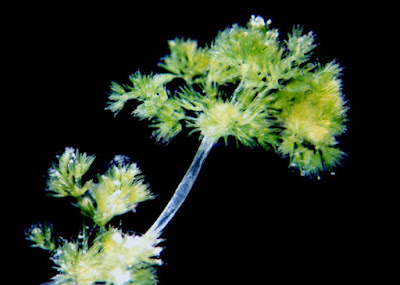
Byron and Phyton, Meet the Bryophytes!
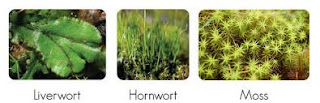
During the Upper Ordovician era 475 million years ago, the terrestrialization of charophycean algae led to the evolution of the first permanent land-dwelling plants, the bryophytes (Willis & McElwain 2014). The term bryophyte is derived from the Greek words Byron , meaning moss, and Phyton , meaning plant (Reece & Campbell 2012). It is used to describe plants with no vascular or specialised transportation system. There are three phyla within the bryophyte group. Anthocerophyta , the hornworts . Bryophyta , which are the mosses. And lastly, Hepatophyta or the liverworts (Reece & Campbell 2012). (Classification of bryophytes, Plant science 4 U 2016) Although bryophytes lack a specialised vascular system, they do have simple water conducting cells which are non-lignified (Willis & McElwain 2014). They also have several shared characteristics with vascular plants of today, which enables them to be distinguished from charophytes (Evert, Raven & Eic...